The Follow Up Should Start Before the Event Ends
Event follow up should not begin with a spreadsheet export days later. A connected platform should turn captured conversation context into action while the interaction is still fresh.
By Ali KamyabCo-founder & CPO, SignalThread6 minute read
Most event follow up begins too late.
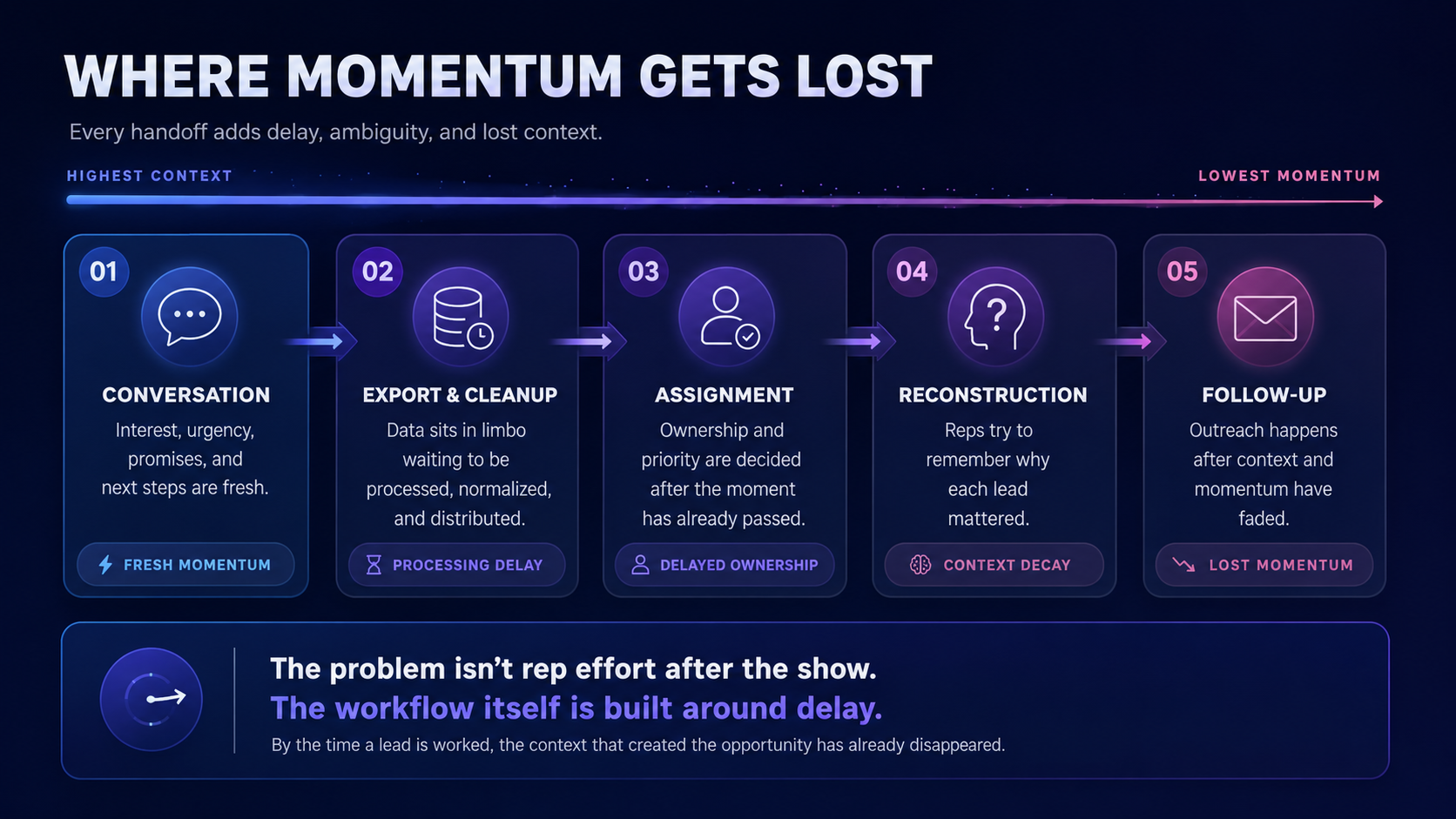
The show closes. The team travels home. Lead files are exported, cleaned, distributed, and imported into other platforms. Sales reviews the list. Marketing tries to understand what happened. Representatives attempt to reconstruct conversations they had days earlier.
Then the emails begin.
By that point, the most valuable part of the interaction, the context surrounding the conversation, has already started to disappear.
That gap is the problem we set out to close with SignalThread Lead Retrieval: follow up should begin while the conversation is still happening, not days later in a spreadsheet.
The industry treats delayed follow up as an operational problem to manage. It should be treated as a product problem to eliminate.
The traditional workflow creates a dead zone
A typical event lead moves through a familiar sequence: scan the badge, add a note, export the list, clean the data, import it into the CRM, assign ownership, decide who matters, create the follow up, and finally send it.
Every handoff adds time. Every delay increases the chance that context will be lost, ownership will remain unclear, or the eventual outreach will sound generic.
Follow up begins during the conversation
The first step in strong follow up is not writing an email. It is understanding what happened.
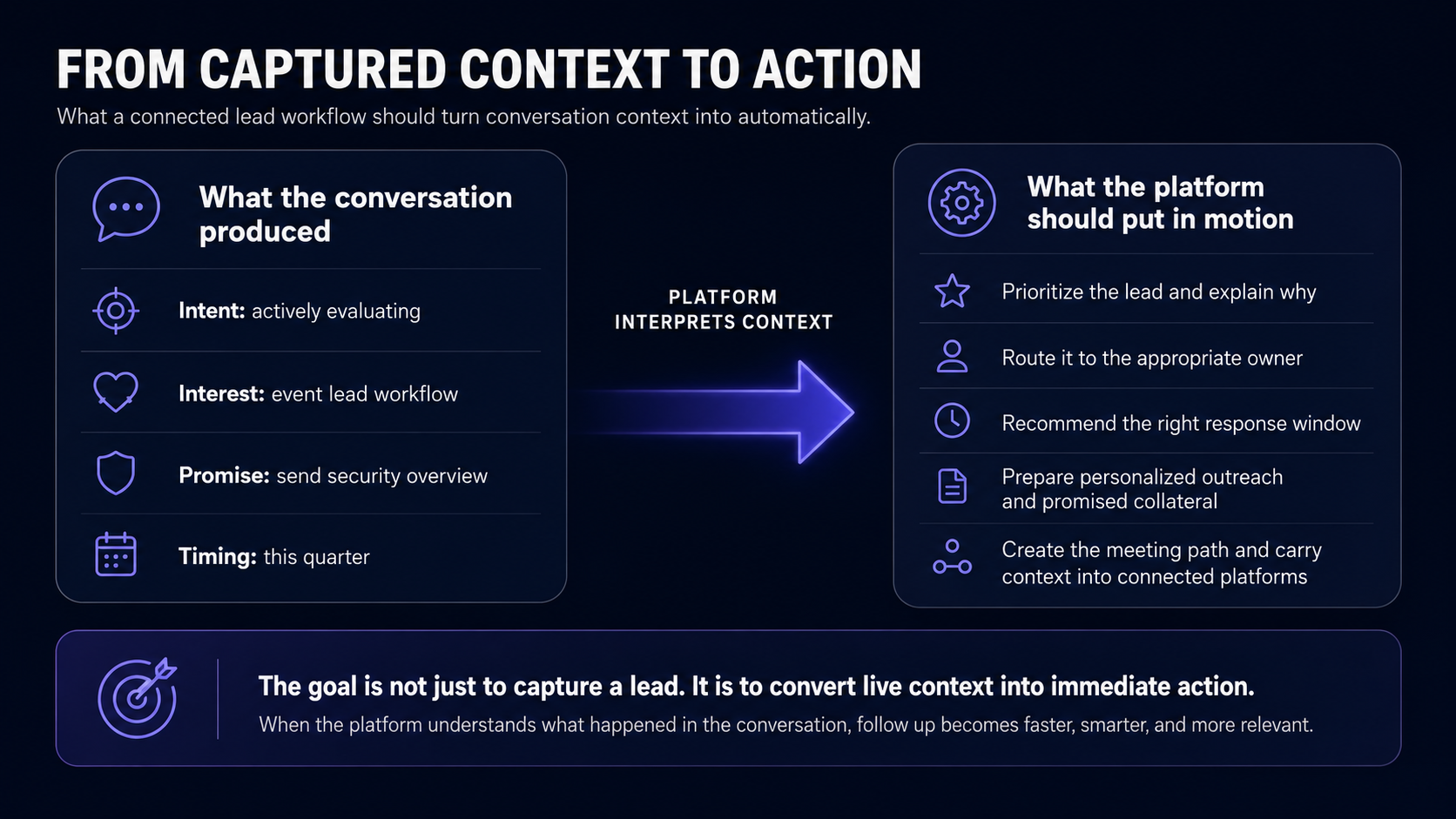
Why did the person stop at the booth? What problem were they trying to solve? Which product or message interested them? Were they actively evaluating options or simply gathering information? What did the representative promise to send? Was a meeting discussed?
Those answers are created during the conversation, not after the event. When the platform captures them at the source, it can begin preparing the next step immediately. That is the capture model SignalThread Lead Retrieval is built around: badge scanning and voice capture that keep the context attached to the lead.
The platform should do more than recommend the next action
A modern lead retrieval platform should not stop at telling the team what they should do next. It should help turn that decision into an executable workflow.
The representative or account owner should remain in control. But they should not have to rebuild the entire interaction manually before taking action.
A drafted email is helpful. A platform that understands why the email matters, who should send it, what it should reference, which material should accompany it, and when it should go out is far more valuable.
Speed matters because relevance has a shelf life
Immediately after a strong booth conversation, both sides remember the details. The attendee recognizes the representative. The problem they discussed is still top of mind. The promised next step feels connected to the interaction.
As time passes, that connection weakens. The follow up begins to feel less like the continuation of a conversation and more like another marketing message triggered by a badge scan.
Faster does not mean treating every lead identically. A high intent conversation may require same day outreach. Someone requesting a specific resource may need it immediately. A longer term prospect may belong in a nurture path. A casual scan may require no immediate action at all.
Automation should reduce reconstruction, not create noise
Poorly designed automation creates more noise. It sends messages because a contact entered a platform. It applies generic rules without understanding the interaction. It produces polished language that could have been written for anyone.
The purpose of automation should be to reduce the manual reconstruction that happens after the event. The platform should organize captured context, identify likely intent, surface commitments, and prepare the next action. The human should review the recommendation, apply judgment where needed, and move the opportunity forward.
The platform handles the administrative burden. The person remains responsible for the relationship.
Mobile and follow up have to be one platform
This only works if the mobile experience and the follow up workspace are part of the same platform.
The rep at the booth should not capture context in one product and then hope another team rebuilds it somewhere else.
Intent, urgency, promised collateral, ownership, timing, and next steps should move through one platform from the moment of capture.
If mobile and follow up are split, context leaks at every handoff. If they are unified, the platform can carry the conversation forward without making the team start over.
The event should become operational while it is still happening
When follow up begins during the event, managers can see which conversations require attention before the show closes. Representatives can identify promised actions they have not completed. Sales leaders can route important opportunities while the relevant people are still available. Marketing can understand which messages and products are generating meaningful interest.
Instead of spending the first several days organizing and reconstructing the event, the team can focus on reviewing prepared actions, refining important outreach, and progressing the strongest opportunities.
The conversation should set the work in motion
A badge scan should not start a waiting period. It should start the work.
The person you met does not care which screen owns the record, which tool sends the email, or which team updates the opportunity. They care whether you understood the conversation and did what you said you would do.
That is the real opportunity. Follow up is not a separate phase that begins later. It is the direct output of a strong conversation, captured clearly and carried forward immediately.
This is the approach we are building at SignalThread. Lead retrieval should capture the context of the conversation, understand what matters, and carry that context into the next meaningful action while the event is still happening. The goal is not another badge scanning tool. It is a connected platform that turns event signals into action.
The future of lead retrieval is not simply faster exporting, cleaner lists, or better email generation. It is a platform that carries a conversation from the booth into the next meaningful action, with the context preserved, the right people involved, and much of the work already in motion before the event ends.